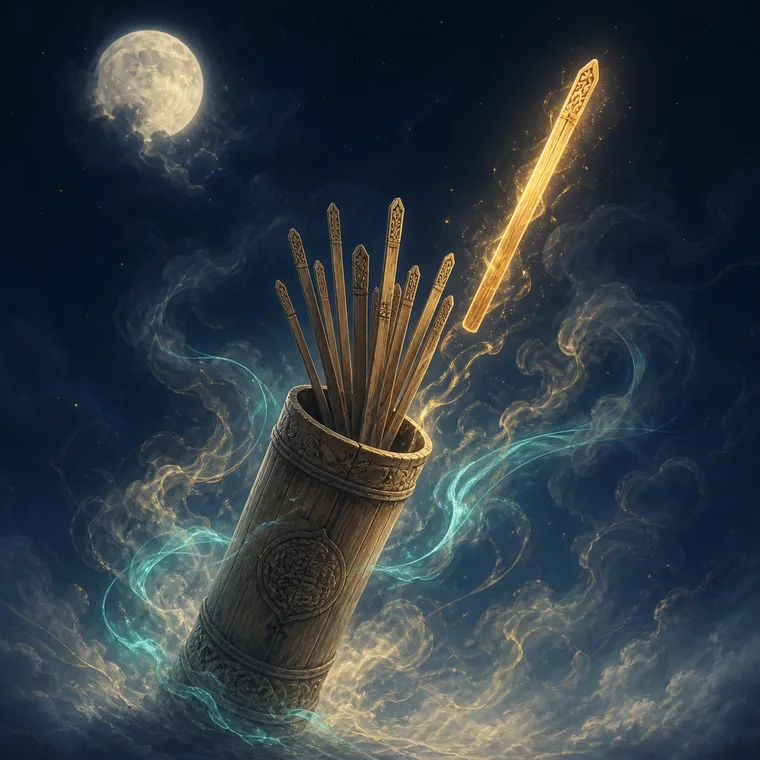
The temple practice behind the canister
Walk into a Chinese temple from Hong Kong to Penang and you will hear it before you see it: the dry rattle of bamboo canisters, each seeker kneeling with a question, shaking until a single stick clatters to the floor. Kau Cim has answered questions this way since at least the Jin dynasty. The stick itself says almost nothing — a number, sometimes a grade. The answer lives in the oracle poem it points to, a compact image of wind, water, granaries, and gates that the seeker must hold up against their own situation.
Our canister holds thirty-six such poems, written in the classical style and graded traditionally from 上上 to 下下. Ask one question per shake and sit with whichever image you receive — the cautionary sticks, temple interpreters like to say, are the generous ones. For a different instrument on the same question, try the I Ching coins, or check what today favors in the daily almanac.
Frequently asked questions
- What are Chinese fortune sticks?
- Fortune sticks — Kau Cim (求籤), also called Chi Chi sticks or lottery poetry — are a temple divination practice over a thousand years old. A canister holds numbered bamboo sticks; the seeker shakes it while concentrating on a question until one stick works itself free. The number corresponds to an oracle poem, which a temple interpreter (or the seeker) reads against the question asked.
- How do I use this online fortune stick tool?
- Hold one sincere question in mind, then shake the canister. One stick rises from the set of thirty-six, each carrying a four-line poem, an overall reading, and guidance for love and career. Like the temple practice, ask one question per draw and take the first answer — repeated redraws for a 'better' stick are traditionally considered to void the reading.
- What do the fortune levels like 上上 and 下下 mean?
- Each stick carries a traditional grade: 上上 (Great Blessing) and 上吉 (Blessing) are favorable; 中平 (Fair) is mixed or conditional; 下 (Caution) and 下下 (Great Caution) warn of difficulty. A cautionary stick is not a curse — it is specific advice about what to avoid, and traditionally considered the most useful grade to receive.
- Are fortune sticks accurate?
- Treat the sticks as a mirror, not a mandate. The poems describe archetypal situations — waiting for a tide, finding an ember under ash, a termite-weakened beam — and their value lies in how honestly you map the image onto your circumstances. Used that way, the draw is a structured moment of reflection rather than a prediction machine.